Thank you for becoming a member of Inside Football. I’m really pleased you’ve chosen to support my work and join my community of passionate football fans.
As a member, you’ll now receive the full member version of Friday’s newsletter, including an exclusive column, extra behind-the-scenes access, and updates from my reporting trips around the world. You’ll also be able to take part in Q&As and send in your own questions for me to consider.
You can also catch up on what you’ve missed, with links my most recent member-only newsletters waiting at the bottom of this email.
Enjoy!
Miguel
|
|
|
|
‘Like a puppy around Trump’: All eyes on Infantino as World Cup crisis grows |
|
|
As the response to the Iran crisis raises new questions over how Fifa works, Arsenal’s win at Brighton deepens a feud. Also in today’s members‑only newsletter: |
-
Top clubs eying Unai Emery as Aston Villa’s form drops
- How Wrexham command attention… and draw irritation
- Why aren’t World Cup co‑hosts USA being treated like Russia?
|
As the headlines from Iran began to deepen in gravity, and the potential ramifications for the World Cup only increased, you might reasonably have expected Gianni Infantino to be distracted, even concerned.
That wasn’t the case, though, as he attended the International Football Associations Board (IFAB) in Cardiff on Saturday. Infantino was described as being on “top form”, where you wouldn’t have thought anything was amiss at all. It could be said this reflects Fifa’s almost blasé public attitude to what is potentially the World Cup’s biggest ever crisis – a host has bombed a qualified country – but there is more going on. The only giveaway that the crisis in Iran was being treated with the seriousness it warranted came when the lights were down, and a Welsh opera singer was performing. It allowed the Fifa hierarchy to check their phones for live news. When anyone spoke to Infantino, though, he was all smiles.
It is exactly this charm that has served him well in the interpersonal elements of the Fifa role, but also in launching himself into membership of the “elite class”; up there in the orbit of the most powerful people in the world. That’s where a mere football official now operates. Former colleagues who know him find that alone maddening. In February, Fifa made a big show of the 10th anniversary of Infantino’s ascension to the role – with two major parties – but there was much less about any discernible change over that time. On Infantino’s first trip to IFAB, in Wales in 2016, he travelled with EasyJet. This time, it was a private jet supplied by Qatar.
The Swiss official is also said to have “changed” over that period, according to many who know him. The descriptions generally tell the story of a previously forgettable, if adequate, lawyer who soon showed he always had an “ego” through the “showmanship” of the Champions League draw, to a figure who visibly delights in being around real power.
And it is within all of that that there is a more pertinent discussion about how and why decisions in the game are actually made, right up to how Fifa is going to navigate the Iran question.
Some of this may sound like the kind of ‘suited administrator’ detail that you haven’t really subscribed to Inside Football for, but it directly affects what you watch. It is why the World Cup is 48 teams, why the Champions League has become a bloated mess where everyone talks about “growth” rather than whether a club with a wage bill of under £400m can ever actually win it.
The Independent has already written extensively on the absurdity of the “executive president” structure in football bodies, which inexplicably invest random men with so much power. There has similarly been constant coverage of how Fifa’s structure does not lend itself to robust discussion on complex issues like Iran. As of Thursday, Inside Football has been told that the Fifa Council – its highest body – still hadn’t met on the subject. There are even more complications with the Iraq national team, currently concerned over whether they can make their play-off with either Bolivia or Surinam in Mexico, due to the conflict preventing both air travel and the ability to secure visas.
All of which plays into a key question: is Infantino working for Fifa, as its president simply representing all member associations, or is Fifa essentially working for Infantino?
Does football governance need more actual football expertise and debate? And while there would usually be sympathy for bodies like Fifa in having to navigate geopolitics way beyond their control, issues like Iran are different because of how much Infantino has immersed himself with Donald Trump. |
|
|
Some insiders put Fifa’s wait‑and‑see approach to Iran’s participation – not even appearing to come up with contingency plans – down to an unwillingness to cut across anything to do with the US president. Infantino is predictably said to be “like a puppy” in Trump’s presence. Melania Trump is described as being less enamoured and didn’t exactly want to make chat at the premiere of her recent film. It is constantly argued within Fifa that Infantino needs to keep Trump onside because one rash decision could cause chaos for a hugely lucrative but logistically complex tournament.
Trump only this week displayed the folly of such narrow thinking by openly saying he doesn’t care about what happens with Iran and the World Cup. So much for all that. What must Infantino have been thinking in that moment? But why make it all so complex in the first place? Why make it so subject to these whims? The explanation touches on a core question: what is actually being served here? Back in 2016, Infantino had promised his voters – the 211 member associations – that he would make them more money. This was the election promise. This ties into fundamental problems with the Fifa structure, given how redistributed revenue is ultimately viewed as a vote‑returning mechanism. By the same token, another element that political scientists question about Fifa governance is the number of committees and roles, generally interpreted as keeping football officials inside the tent. The “committee circuit” can provide quite a life, and a position on Fifa’s Council means $300,000 a year plus considerable expenses for around ten days’ work.
That allows scope for a confusion of roles and outlooks. Who is an executive actually working for in such situations – Fifa or their member association? Cross purposes very often arise, as with the debate over World Cup ticket prices. So, why doesn’t the money go to the member associations directly, rather than individuals? It would avoid muddying the waters in individual relationships with Fifa. As a further example, many officials are known to have been aghast at the awarding of the Peace Prize, but who, outside Norway’s Lise Klaveness, has actually said anything?
And that’s despite the award being given in their name. Fifa is ultimately serving the FA, the SFA, the FWA, the IFA, and every other federation, consequently linking them to a very morally complex debate. How much debate and research was meanwhile actually done on the benefits of a 48‑team World Cup, and not just in terms of more teams getting more money? What about the game as it is played?
What of the Club World Cup? Major club executives – outside Real Madrid’s Florentino Pérez – are generally said to have kept Infantino at arm’s length… but there is a toleration for him when they see the potential revenue from a Club World Cup appearance. In the Premier League, there is general frustration with Infantino over agent regulation, the calendar, the complications around international call‑ups and – of course – the feeling that Fifa is focused on increasing revenue over what is good for the game.
Infantino’s body isn’t exactly alone there, mind. Which brings this discussion full circle. How many decisions, generally, are made for actual football? Do figures like Infantino even properly understand the game, and what makes it work? Michel Platini rightly received a lot of criticism in his role as Uefa president and was ultimately banned from football for eight years for conflict of interest and dereliction of duty over a ‘disloyal payment’ – although he was twice cleared of bribery and corruption – but one thing that everyone says is that he naturally got how competitions work; why you tune into football. The game has moved away from this over the past decade. So many decisions are now taken that are baffling. And that feeling persists. Rather than making the sport the best it can be, it has only served to launch figures like Infantino into the elite class.
That isn’t what this is supposed to be for. |
|
|
There are five Uefa countries who have had just one player score at least one hat-trick in the Premier League, since 1992. Name the countries, and the players. |
Note: retired players obviously count. The player can have scored more than one hat-trick. |
|
|
| Answer at the bottom of the newsletter |
| |
|
| Answer at the bottom of the newsletter |
| |
|
Tensions between Brighton and Arsenal goes way back |
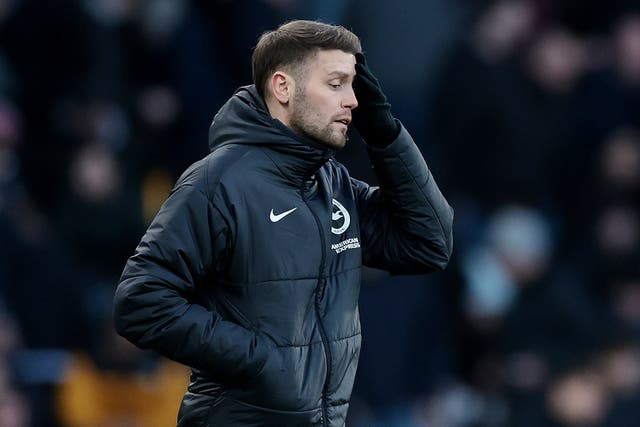
After Fabian Hurzeler’s extended quotes about Arsenal were put to Mikel Arteta on Wednesday night, the Basque simply responded – with full sarcasm – “what a surprise”. Those who know Arteta say that comment didn’t just come from the pre‑match build‑up, in which the Brighton coach also had a lot to say.
The tension goes way back, to Hurzeler’s first months in the job and his very first game against Arsenal. That was when Declan Rice was sent off for a contentious second booking in a 1‑1 draw in September 2024, a match typical of Arsenal’s 2024‑25 season.
While Arteta’s staff were visibly aggravated by the decision, they didn’t really appreciate the manner in which Hurzeler was involved – on the sideline and elsewhere. They felt the German himself could have been sent off.
It was seen as similar when Brighton claimed a 1‑1 draw in the reverse fixture, after a debatable penalty. Hurzeler would, of course, insist he was standing up for his team, especially amid the perception that it’s always more difficult for the so‑called “smaller” clubs.
There’s certainly “no love lost”, though, as one insider says. Other clubs laugh that Arteta himself can be “annoying”, but that Hurzeler has a reputation for constantly talking at officials. |
|
|
A race that will have huge coaching repercussions |
The race for the top five could have far greater repercussions than just who gets into the Champions League next season. While qualification is seen as highly relevant to the futures of Michael Carrick and Arne Slot, what of Unai Emery? He has long been seen as fully focused on Aston Villa, but a few Champions League‑level clubs are starting to think they may be able to extract him if the club don’t make it next season. They’re aware of an understandable frustration around Villa Park, given how form in late 2025 has tailed off. Some Premier League figures, meanwhile, felt that Chelsea’s brilliant 4‑1 win at Villa Park had been coming for some time.
If Liam Rosenior can raise eyebrows over what he says, opposition coaches think his tactical work is genuinely high‑end. “He gives you things to think about you wouldn’t expect,” in the words of one. |
|
|
As Wrexham get a flavour of the Premier League, they’re still not to everyone’s taste |
Focus will turn to Wrexham this weekend, given their FA Cup fifth‑round tie against Chelsea… as if the Welsh club doesn’t get enough attention.
There are many figures in the EFL – and the Premier League – who bristle at everything to do with the Hollywood‑linked outfit. Even at last week’s Financial Times Business of Football summit, senior football people were rolling their eyes at the very mention of them. That isn’t universal, of course, since some EFL clubs actually like the attention it brings. Others just like any money coming in.
The wonder is whether the FA Cup match offers a prelude to something more, in the Premier League, very quickly. Some of the more football‑based figures within Wrexham do think it could be beneficial to stay in the Championship for another season – to consolidate, to gradually build up. The stadium, for one, would have a lot of work to do.
And while the hierarchy is conscious of such challenges, that’s still just how they see them: challenges to be solved. The view from the owners is described as “very American”. If the chance is there, go for it. Keep the momentum going. |
|
|
Given Russia’s ban, why is there no talk of the US being thrown out of the World Cup? Simon, and others
|
|
|
Thanks, Simon. It’s obviously a huge question, and many will make moral arguments, but debates touching on this theme are often founded on a misconception. Fifa didn’t actually throw Russia out, at least not of their own accord. Poland and Ukraine refused to play them in the 2022 World Cup qualifiers, which set things in motion.
Despite that apparent precedent, Fifa generally takes the view that teams should play regardless of wider circumstances, due to the obvious complications of a sporting body having to adjudicate on geopolitics. By the same token, there is obviously no will for anyone to refuse to play the US – or, by extension, for anyone to refuse to play in the World Cup. The entire theme does, however, open up some very complicated questions. |
|
|
| When the post-match offers the real game |
|
|
| When the post-match offers the real game |
|
|
I attended Brighton 0‑1 Arsenal and, for all the wider debate, yes, it was one of those games where you couldn’t help but look online at all the action elsewhere… yet it still wasn’t quite one of those where you felt you were at the wrong game. The story about Arsenal extending their lead was enough, and it was then all amplified by Hurzeler’s press conference. The Brighton coach’s comments have actually formed the story of the week so far.
It was also one of those occasions where you could sense it building in the room. Hurzeler had made one comment and then insisted he wanted to talk about his team… but on being asked, he couldn’t help himself. There was a cascade of them. It was a lesson in how a follow‑up question is often worth it. Arteta’s response, offered above, was a fine final act. |
|
|
The last week was a double week, with some predictions consequently included in Monday’s newsletter. It brought four correct outcomes and two correct scorelines in matchweek 28 and four correct outcomes but no correct scorelines in matchweek 29, leaving us at 122 correct results out of 291, and 164 points out of 873 when factoring in exact scorelines. Bonus prediction week: Wolves 0-2 Liverpool Mansfield Town 0-4 Arsenal Wrexham 1-3 Chelsea Newcastle United 1-0 Manchester City Fulham 2-0 Southampton Port Vale 0-2 Sunderland
Leeds United 2-0 Norwich City West Ham United 1-3 Brentford I know many of you play along so let me know how your points are stacking up via email. |
|
|
Bosnia and Herzegovina, Edin Dzeko Bulgaria, Dimitar Berbatov Iceland, Eidur Gudjohnsen
Israel, Yossi Benayoun Serbia (then Yugoslavia), Savo Milosevic |
Drop me an email and let me know how you did. Thanks for reading – and see you on Monday! |
|
|
|