Hopefully you are enjoying the promised sunlit uplands of Brexit. For the past decade I have been trying to communicate the many impacts of leaving the European Union for the British traveller: from countering the widespread assertions from the Leave campaign that “nothing would change for UK visitors to Europe” to publicising the pitfalls of passport validity. Evidently there is more work to do on the latter subject, because the celebrated children’s author Michael Rosen fell foul of the “10 year rule” yesterday. The virtual mailbox is overflowing with questions on the EU entry-exit system (EES) and its inconsistent idiosyncrasies.
One location where the EES is working a treat, by all accounts, is Vienna airport – and I am glad to offer advice on the Austrian capital in summer. Also, the best option for arranging a trip to Macao, Hong Kong’s non-identical twin. Should you book now or leave it later?
Your questions and comments on any travel topic are always welcome. Email me here: yourtravelquestion@independent.co.uk. I will do my best to provide an answer – and help as many readers as possible, whether you are seeking reassurance, information or inspiration. |
|
|
| Most-asked question this week |
|
|
| Most-asked question this week |
|
|
Should I worry about the EES queues? |
|
|
Loyal readers will recall that the headline of this section last week was: “Should I worry about my flight going ahead?” As you can see, this week is subtly different. You may well have read about the easyJet flight from Milan Linate airport to Manchester on Sunday. It was the first weekend of the full roll-out, and more than 100 passengers at the Italian hub watched their homebound plane depart without them. Many passengers who needed to get back in a hurry spent a fortune getting home. The incident has raised concern among many other travellers that their journeys could be expensively and stressfully disrupted because of the EU digital borders scheme.
Sue Wilkinson asks: “Do I have to go through fingerprint and head shots at every airport I travel through now? I have done it once, at Pisa last month. Does that information hold for a certain length of time or do I need to go through the same process each time I travel?” I can tell you the official stance. Once you have registered the four fingerprints of your right hand, along with the facial biometric, the data is stored centrally by the EU. On subsequent crossings of the border you should need only to provide one biometric – which in almost every case will be the face, since that is much quicker and easier. However, one factor common to the stories from passengers caught up in the Milan nightmare was that the two border officials who were handling for outbound flights to the UK were insisting on getting the fingerprints as well as faces of British travellers, even though most of them had been collected on the way in.
Judith Horrocks is flying from her local airport, Humberside, to Amsterdam and onwards to Madrid. “Will I need to do the EES screening just at Amsterdam Schiphol or also at Madrid airport when I arrive there, which would be stressful?” No, once you are in the Schengen area, every flight between member states is treated as a domestic departure. The only time you are likely to be asked to show your passport is as identification to be matched with your boarding pass when joining the aircraft for the onward leg.
Judith also asks about the possibility of long waits for EES. When arranging her flight, she fears she may have to choose “an extended wait between landing and getting my connecting flight to Spain”. Not necessarily: the 9.50am outbound flight to Amsterdam connects with the 1.50pm onward link to Madrid, with two hours on the ground at Schiphol (never a bad place to have “dwell time”). In the unlikely event that the queue extends beyond that, there is a flight three hours later to Madrid. You should be rebooked onto this if you miss the first one.
John Cooper wants “information and guidance on arriving in Malta with the entry-exit system” ahead of a trip there next month. No news from other readers is, in my book, good news. I have heard nothing untoward. Given the relatively large number of UK arrivals and departures at the island’s Luqa airport – a remarkable 25 today alone – the authorities appear to have the staff and equipment in place to handle crowds smoothly.
|
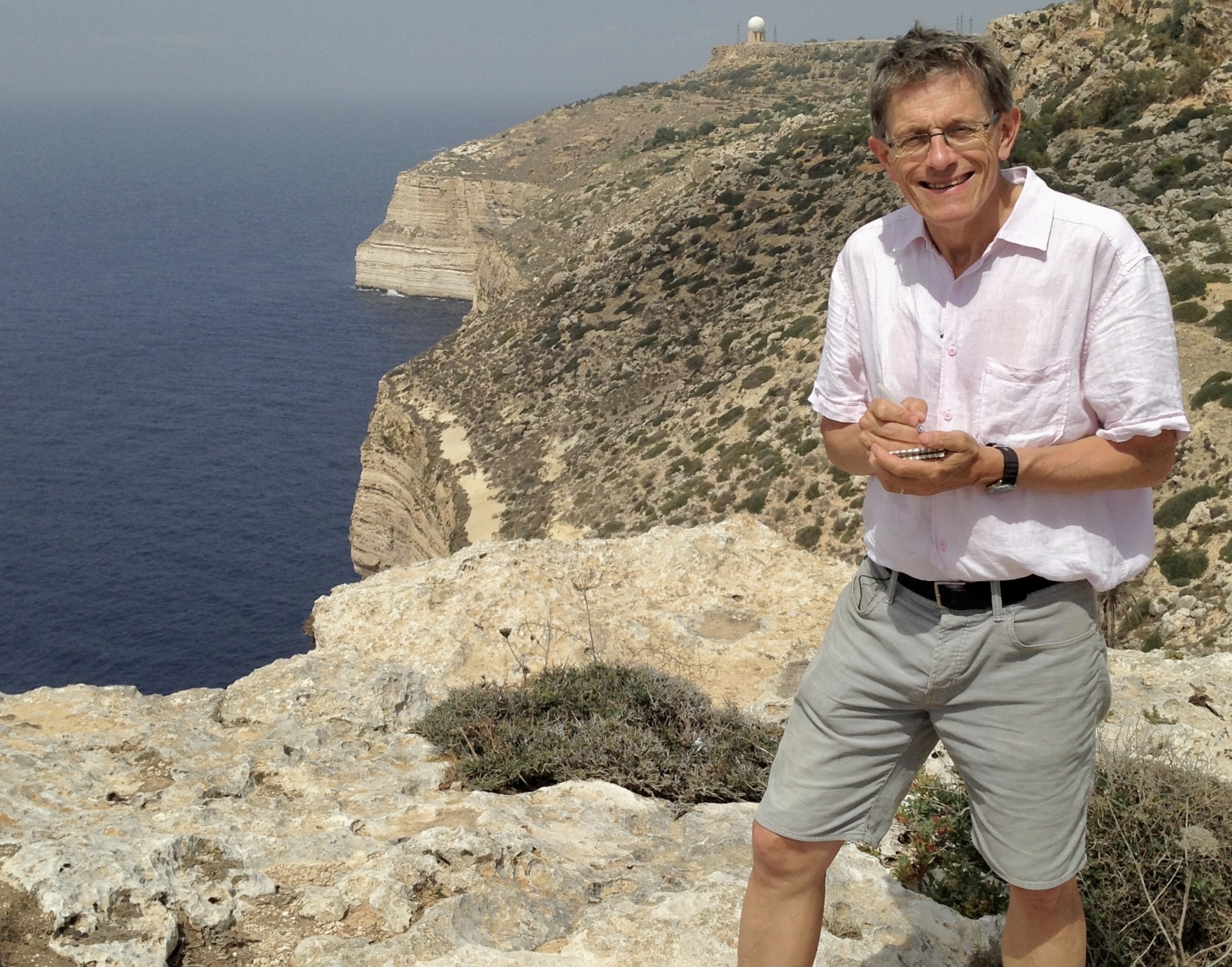
Maltese bliss: the Mediterranean island is an easy location to reach |
|
|
I’m heading to Vienna with my wife and 22-year-old daughter for six days in July. Can you recommend things to do, places to see etc? Adrian |
|
|
Among the great capitals of central Europe, Vienna stands out for the sheer imperial might of its architecture. Austria, the Czech Republic and Hungary have similar populations (in the range of nine to 11 million people), but Vienna was once the capital of then Habsburg Empire – a vast undertaking. So walking the summer streets will always prove rewarding.
Among the museums, the standout for me is the Upper Belvedere – home to Gustav Klimt’s The Kiss and much else. On a clear day the view from here across the city is magnificent. Two other exquisite structures: the National Library, with its elaborate ceiling, and St Peter’s Church – a study in 18th-century Baroque brilliance, dripping with decoration. You should book ahead for the Spanish Riding School. Yes, this equestrian exhibition is touristy, but still an impressive spectacle.
With temperatures likely to be high, you might wish to forsake the interior style of the Cafe Central (an archetype of imperial indulgence) for the chance of an outdoor table at the Cafe Pruckel on the edge of the city centre. You can dine well here at a decent price. For a final meal, though, head beneath the city streets. I recommend Melker Stiftskeller – a convivial cellar restaurant dating from 1629. Book well ahead.
At the height of summer, you should escape the city. My favourite nearby location is Sopron, about 75 minutes by train – just across the border in Hungary. It is full of baroque marvels, but also has some recent history: it was here, in the summer of ’89, that Hungary opened its frontier with Austria. Citizens on the “wrong” side of the Iron Curtain could walk across the border unchallenged to join the “Pan-European Picnic”. The fall of the Berlin Wall began here. The site is well marked and makes a good summer stroll.
|
Summer night: Supper at the Cafe Pruckel in Vienna |
|
|
Do you have a travel question for Simon? |
Click the button below for the chance to have your burning questions answered! |
|
|
I need to be in Macao on 25 June for a philatelic exhibition, and some sightseeing. I’m told that the best way is via Hong Kong and a bus or Uber. Would you book now, or wait until the political situation settles? Chris King |
|
|
Book now. With so much uncertainty in the world, travellers are holding back – leaving the airlines to cut fares and entice people on board. For a straight-through trip, I would be on Air China from Gatwick via Beijing to Macao, for a reasonable £550 or so on a range of dates in June. For me, this has the added advantage of flying over Russia, sharply reducing the journey time. If you want to include Hong Kong, fares are even cheaper (again, on Chinese carriers). Buses run every half-hour from Hong Kong airport to Macao – look for the Airport Direct signs. You can buy your ticket with a credit card on the spot.
|
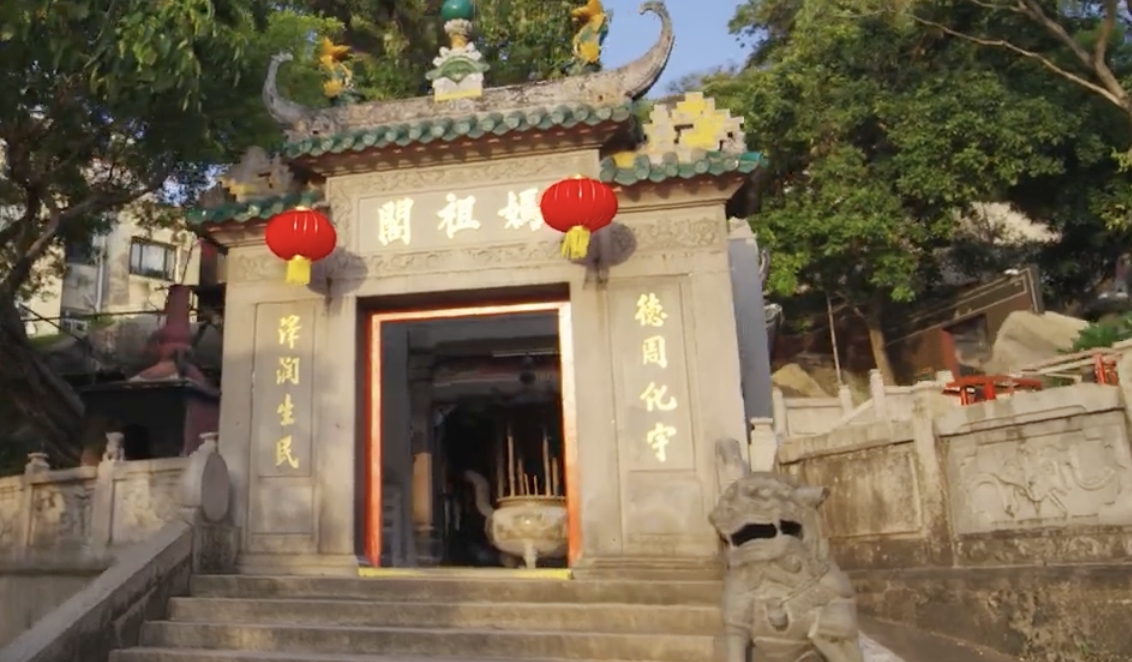
Macao is well worth adding to a trip to Hong Kong – or vice-versa |
|
|
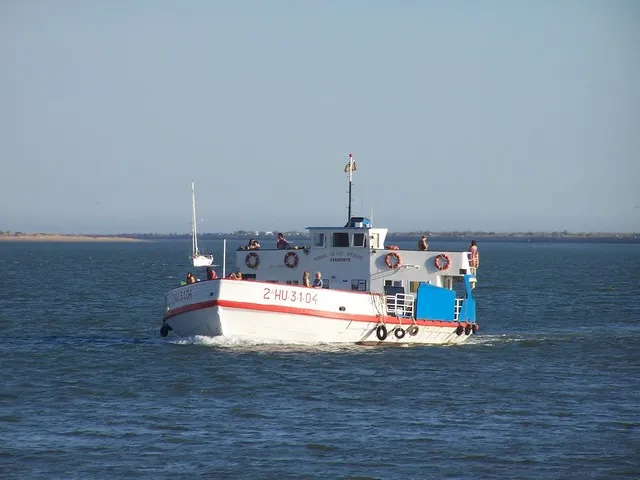
You mentioned taking the ferry at Villa Real de Santo Antonio in Portugal across the river to Ayamonte in Spain. Is there not a bridge now that you can use instead?
Rachel Lindo |
|
|
Drivers in a hurry can certainly take the modern bridge to the north, but I much prefer the traditional ferry – every hour – for a modest fare of €2.50. |
|
|
|